

We are all about our people
© Consea 2022. All right reserved
We’re here to help people to work and improve
© Consea 2022. All right reserved
© Consea 2022. All right reserved
© Consea 2022. All right reserved
4women
Women’s Leadership
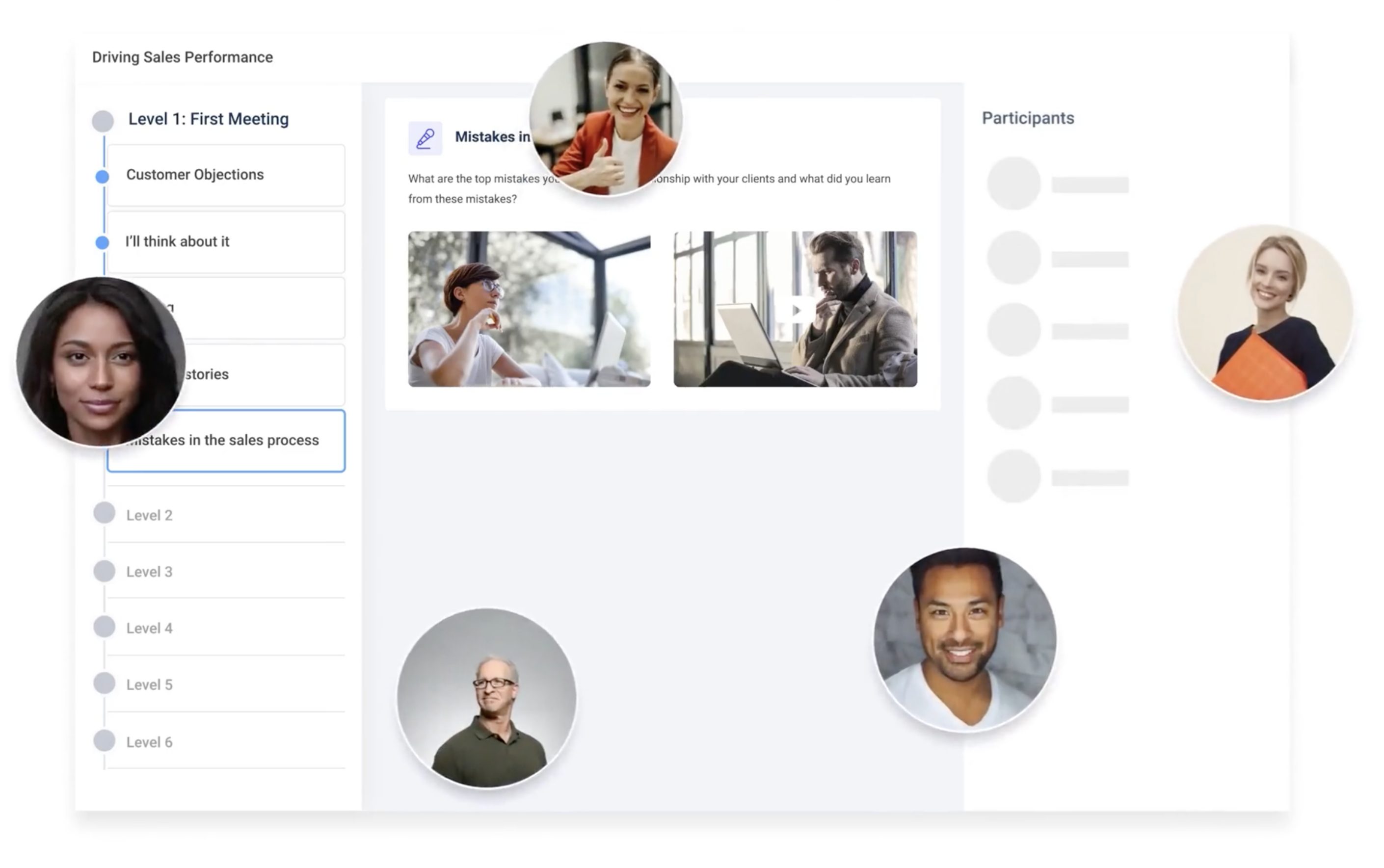
We want to make our contribution to reducing the gender inequality gap by promoting a program aimed at developing leadership skills, fostering empowerment, and creating a female-only community. The Women’s Leadership Development program lasts 4 months and can be structured both in inter-company or dedicated programs; it is divided into thematic modules that can be customized according to the needs of our clients.



-Padmasree Warrior
(CEO & Founder, Fable)
Developing the full potential of women in business and society
Bridging the gap between business-focused leadership and value-based leadership
Gaining awareness of one's emotional dimension in achieving personal and organizational goals
Supporting women in creating their personal and professional action plan
Learning based on mutual exchange and collaboration
Learning based on continuous engagement through feedback and assessments from the success manager
Self-paced and self-directed learning
Learning based on challenges and on the celebration of achievements

For decades, companies and nations built their competitive advantage by accumulating knowledge. The world's leading universities, research centers, access to information and ability to develop specialized talent created barriers that few competitors could overcome. This logic shaped the knowledge economy and defined what organizations looked for in their leaders. For the first time, that paradigm is beginning to change. Artificial intelligence is democratizing access to knowledge at an unprecedented pace. Information, research, analytical models and strategic insights that once required years of experience or large teams of specialists can now be accessed in seconds. This does not diminish the importance of artificial intelligence. On the contrary, it is likely to become the most transformative technology of our generation. Its greatest impact, however, may not be the creation of more knowledge, but the fact that knowledge itself is becoming less of a competitive differentiator. As knowledge becomes increasingly accessible, competitive advantage shifts from knowing more to interpreting better. The ability to ask the right questions, connect seemingly unrelated ideas, understand complex contexts and make sound decisions when there are no obvious answers becomes far more valuable than simply having access to information. In other words, as artificial intelligence expands our capacity to know, human intelligence becomes the critical factor in turning knowledge into judgment. This shift creates a particularly compelling opportunity for Brazil and Latin America. For decades, the region has largely been defined by its challenges: economic volatility, regulatory uncertainty, political change, currency fluctuations and business environments where unpredictability has often been the norm. While these conditions have traditionally been viewed as obstacles to growth, they have also shaped a generation of leaders who have learned to make decisions under uncertainty, adapt strategies with speed and lead organizations in environments where change is constant rather than exceptional. At Consea, we are seeing this reality become increasingly evident in our international assignments. Global organizations are no longer looking only for executives with strong technical credentials. They are looking for leaders capable of exercising sound judgment in ambiguous situations, building trust across cultures, balancing competing priorities and transforming uncertainty into strategic direction. Technical expertise remains essential, but it is no longer enough to explain why certain executives consistently stand out in a global environment. This may help explain why Brazilian and Latin American executives are gaining increasing recognition in leadership roles around the world. The experience of operating in highly complex markets has developed capabilities that are difficult to replicate in more predictable environments. Judgment, adaptability, resilience, systems thinking and the ability to lead people through uncertainty have evolved from desirable leadership qualities into essential competitive advantages. Artificial intelligence will continue to redefine the way organizations operate, but it cannot replace judgment. It cannot build trust, understand the subtle dynamics of organizational culture or assume responsibility for decisions that shape the future of a business. As knowledge becomes more widely available, the leaders who create the greatest value will be those who know how to apply it with discernment, perspective and long-term vision. Perhaps the most profound impact of artificial intelligence will not be technological, but human. By democratizing knowledge, it highlights a simple reality: the true competitive advantage of any organization will continue to depend on the quality of the decisions made by its leaders. In that respect, Brazil and Latin America may have far more to contribute to the future of global leadership than they are often given credit for. Markets develop companies. Complexity develops leaders. Author: Samir Amad, Country Manager Brazil Versão em português A próxima vantagem competitiva não será a inteligência artificial. Será a inteligência humana. Durante décadas, empresas e países construíram sua vantagem competitiva a partir da capacidade de acumular conhecimento. As melhores universidades, os maiores centros de pesquisa, o acesso às melhores informações e a formação de especialistas criaram barreiras competitivas que pareciam intransponíveis. Foi essa lógica que definiu a economia do conhecimento e moldou o perfil dos líderes mais valorizados nas últimas décadas. Pela primeira vez, esse paradigma começa a mudar. A inteligência artificial está democratizando o acesso ao conhecimento em uma velocidade sem precedentes. Informações, análises, pesquisas e modelos que antes exigiam anos de experiência ou grandes equipes especializadas hoje podem ser acessados em poucos segundos. Isso não reduz a importância da inteligência artificial. Ao contrário, ela será provavelmente a tecnologia mais transformadora da nossa geração. No entanto, seu efeito mais profundo talvez não seja produzir mais conhecimento, mas reduzir o valor competitivo de simplesmente possuí-lo. Quando o conhecimento se torna amplamente acessível, a vantagem deixa de estar em quem sabe mais e passa a estar em quem interpreta melhor. A capacidade de formular as perguntas certas, conectar informações aparentemente desconexas, compreender contextos complexos e tomar decisões quando não existe uma resposta evidente torna-se muito mais relevante do que o simples acesso à informação. Em outras palavras, à medida que a inteligência artificial amplia nossa capacidade de conhecer, cresce também a importância da inteligência humana para transformar conhecimento em julgamento. Essa mudança cria uma oportunidade particularmente interessante para o Brasil e para a América Latina. Durante muito tempo, nossa região foi percebida principalmente pelos desafios que enfrenta: volatilidade econômica, mudanças regulatórias frequentes, instabilidade política, oscilações cambiais e um ambiente de negócios marcado pela imprevisibilidade. Embora esses fatores tenham sido frequentemente tratados como obstáculos ao desenvolvimento, eles também moldaram uma geração de líderes acostumados a decidir em cenários de elevada complexidade, adaptar estratégias rapidamente e conduzir organizações em ambientes onde a única constante é a mudança. Na Consea, observamos essa realidade de forma cada vez mais clara em nossos projetos internacionais. Empresas globais não procuram apenas executivos com sólida formação técnica. Procuram líderes capazes de exercer discernimento em contextos ambíguos, construir confiança entre diferentes culturas, equilibrar interesses conflitantes e transformar incerteza em direção estratégica. O conhecimento técnico continua sendo indispensável, mas já não basta para explicar por que determinados executivos se destacam em um ambiente global cada vez mais complexo. Talvez essa seja uma das razões pelas quais profissionais brasileiros e latino-americanos vêm ganhando espaço em posições estratégicas ao redor do mundo. A experiência adquirida em mercados desafiadores desenvolveu competências que dificilmente podem ser reproduzidas em ambientes mais previsíveis. Julgamento, capacidade de adaptação, resiliência, visão sistêmica e habilidade para liderar pessoas em momentos de incerteza deixaram de ser características desejáveis para se tornarem competências centrais da liderança contemporânea. A inteligência artificial continuará evoluindo e redefinindo a forma como as organizações operam. No entanto, ela não substitui discernimento, não constrói confiança, não compreende as nuances de uma cultura organizacional e tampouco assume a responsabilidade pelas decisões que definirão o futuro de uma empresa. Quanto mais o conhecimento se torna acessível, maior tende a ser o valor daqueles capazes de utilizá-lo com equilíbrio, senso crítico e visão de longo prazo. Talvez a maior transformação provocada pela inteligência artificial não seja tecnológica, mas humana. Ao democratizar o conhecimento, ela torna evidente que a verdadeira vantagem competitiva das organizações continuará sendo a qualidade das decisões tomadas por seus líderes. E, nesse aspecto, acreditamos que Brasil e América Latina têm muito mais a oferecer ao mundo do que normalmente se reconhece. Mercados desenvolvem empresas. A complexidade desenvolve líderes. Autor: Samir Amad, Country Manager Brazil
Read allSustainability is ultimately a leadership issue. While policies and frameworks matter, it is the daily decisions made by leaders that determine whether sustainability principles translate into meaningful outcomes. Evidence increasingly supports this link. According to Accenture, companies with consistently high ESG performance—often driven by leadership decisions—achieve 2.6 times higher total shareholder returns and nearly 5 times higher operating margins than their peers with weaker ESG performance. These results highlight the strategic importance of leadership-led sustainability, not just in values, but in performance. Sustainable leadership begins with perspective. Leaders who balance short-term pressures with long-term consequences are better positioned to navigate complexity and trade-offs. This mindset aligns closely with findings from McKinsey, which show that organizations most successful at capturing sustainability value tend to take a long-term view of risk, capital allocation, and stakeholder expectations. Decision-making through a sustainability lens requires asking broader questions. Beyond “Is this profitable?” leaders increasingly ask, “Is this resilient?” and “What are the downstream effects?” This approach matters in a business environment where, according to the World Economic Forum, 85% of executives plan to continue advancing sustainability disclosures regardless of regulatory changes, recognizing sustainability data as strategically important as financial data. Consistency is another defining element of sustainable leadership. When decisions align with stated values—and when those values are embedded into governance and accountability—trust grows. Research frameworks in sustainable leadership literature consistently link participatory decision-making and transparency with higher levels of employee commitment and organizational stability over time. Finally, leadership shapes culture. By legitimizing long-term thinking and encouraging shared responsibility, leaders enable sustainability to diffuse across the organization. In this way, sustainability becomes not a top-down directive, but a collective discipline—guided by leadership choices and reinforced through everyday decisions. Author: Antonella Cerabona — Head of Americas, Consea Group
Read allClient Snapshot Industry: Industrial Electronics & Manufacturing Location: North China Assignment: General Manager Service: Executive Search Client: European multinational manufacturer of electronic components, battery chargers, and power management solutions. With more than 50 years of history, operations in 13 countries, over 1,700 employees worldwide, and annual revenues exceeding hundreds million of USD, our client is a trusted partner to global OEMs across the automotive, construction, agriculture, material handling, and commercial vehicle sectors. As part of a leadership transition, the company partnered with Consea to identify a new General Manager for its manufacturing operations in North China. The Business Challenge Replacing the General Manager of a strategic manufacturing facility required much more than filling a leadership vacancy. The successful executive would be responsible for ensuring operational continuity while driving future growth and strengthening the alignment between the Chinese organization and the Group's global strategy. Reporting directly to the Group CEO and Board of Directors in Europe, the General Manager would oversee all key business functions including production, supply chain, quality, finance, human resources, and business development, while leading a manufacturing site of more than 100 employees and collaborating with the company's commercial offices across China. The role demanded an executive capable of balancing operational excellence with financial discipline, strategic vision, and strong cross-cultural leadership. Search Complexity The assignment presented several challenges. The client sought a leader with a proven background in industrial manufacturing, strong operational and financial management capabilities, and the interpersonal skills required to lead local teams while working closely with international stakeholders. The company was open to considering both local and expatriate candidates, but each profile came with its own set of challenges. For expatriate profiles, the talent pool in North China was extremely limited. On top of that, stability was a major concern: the previous two General Managers had both stayed only for a short period, which had affected employee confidence and trust. The client therefore needed someone who could quickly build credibility, connect with the team, and communicate effectively in the local language. Industry background was important, but not necessarily a perfect match; what mattered most was finding someone with experience in similar industrial environments, a solid understanding of manufacturing processes, and the ability to step in and lead with confidence. Another challenge was that expatriates already based in North China were not easy to attract, and those willing to relocate to the region were even harder to secure. For Chinese profiles, the bar was different. The client placed strong emphasis on industry and product expertise, along with a track record in international companies and strong English proficiency. Many candidates could meet the technical requirements but it was much harder to find professionals who also had the right international mindset and could operate comfortably with headquarters in Europe. In other words, the search was not just about finding a strong plant leader, it was about finding someone who could bridge cultures, earn trust locally, and work effectively in a global organization. Beyond identifying qualified candidates, the search required assessing long-term leadership potential, organizational fit, and the ability to navigate an international reporting structure. Consea's Approach Drawing on our extensive executive search experience across the industrial sector in Asia, Consea designed a targeted search strategy focused on identifying senior leaders with the right balance of operational expertise, strategic mindset, and leadership capabilities. The search initially focused on the North China market before expanding across the broader region to maximize access to qualified talent. Leveraging our proprietary network, direct executive search methodology, and active market mapping, we identified and assessed a select group of executives aligned with the client's business objectives. Throughout the assignment, our consultants partnered closely with both the local leadership team and the European headquarters, managing every stage of the process: from candidate assessment and shortlist presentation to interview coordination, stakeholder alignment, and offer negotiation. The Outcome The search process involved multiple interview rounds with both local management and senior executives from the European headquarters. The successful candidate distinguished himself through a compelling combination of executive leadership, deep understanding of the local business environment, and a genuine commitment to the opportunity. Demonstrating motivation throughout the process, the finalist traveled to Europe to meet personally with the Group CEO during the final stage of the selection process. Although the negotiation proved complex, Consea facilitated discussions between both parties, ultimately supporting a successful agreement. Business Impact Successfully appointed a strategic General Manager for the client's manufacturing operations in North China. Delivered a highly qualified shortlist despite a limited executive talent pool. Managed a complex cross-border selection process involving multiple stakeholders across China and Europe. Facilitated successful executive negotiations, securing a high-impact leader for a business-critical role. Enabled operational continuity while supporting the client's long-term growth strategy in China. Why Consea Leadership transitions within manufacturing organizations require far more than industry expertise. They demand a deep understanding of local talent markets, cross-cultural leadership, organizational dynamics, and the strategic priorities of multinational businesses. By combining local market knowledge with an international perspective, Consea helps organizations identify leaders who not only meet today's operational requirements but also contribute to sustainable business growth and long-term organizational success. Whether you're expanding into new markets, managing a leadership transition, or strengthening your executive team, Consea partners with organizations to identify and attract executives who create lasting business impact. Contact our consultants to discuss how we can support your next executive search.
Read allAs companies continue to reassess their global operating models, India has emerged as one of the most attractive destinations for investment, manufacturing, and talent acquisition. Supported by favorable demographics, competitive labour costs, and a rapidly expanding economy, the country is increasingly becoming a key component of international growth and diversification strategies. A Favourable Macroeconomic Environment With a population exceeding 1.4 billion people, India is now the world's most populous nation. This demographic advantage provides organizations with access to a vast and continuously growing labour pool across a wide range of sectors and skill levels. From a cost perspective, India remains highly competitive. While labour costs have risen significantly in China over the past two decades, India continues to offer comparatively lower wage structures, particularly in manufacturing, engineering, business services, and technology functions. Combined with government initiatives aimed at attracting foreign investment and strengthening industrial capabilities, this has contributed to sustained economic growth and increasing international interest. The country's expanding domestic market further enhances its attractiveness, allowing businesses to access both production capacity and growing consumer demand within a single market. Why Global Companies Are Investing in India Increasing geopolitical uncertainty and supply chain disruptions have accelerated the adoption of "China Plus One" strategies, encouraging organizations to diversify operations across multiple Asian markets. As a result, a growing number of multinational companies have already established or are establishing manufacturing facilities, engineering centres, shared service operations, and technology hubs throughout India. Industries such as automotive, electronics, pharmaceuticals, industrial manufacturing, and information technology have been particularly active in expanding their presence. The country's leading business centres continue to attract the majority of investment and talent. Key hubs include Mumbai, Delhi NCR, Bengaluru, Hyderabad, Chennai, Pune, and Ahmedabad, each offering distinct strengths in areas such as manufacturing, technology, financial services, and research and development. Opportunities and Structural Challenges While India's potential is significant, organizations must also navigate a number of structural and cultural complexities. One of the most frequently reported challenges is the leadership capability gap. Although the country produces a large number of highly qualified graduates and technical professionals, demand for experienced leaders often exceeds supply. Companies expanding their operations in India frequently encounter difficulties in recruiting professionals with 15-20+ years of experience who combine technical expertise, international exposure, strategic thinking, and people leadership skills. As a result, leadership hiring timelines are often significantly longer than in more mature markets, and retention of key talent has become a strategic priority. Cultural considerations also play an important role. India is characterized by considerable regional diversity and remains influenced by social structures that have evolved over centuries. Business practices, communication styles, and expectations around hierarchy can differ substantially from those commonly found in Western organizations. In addition, while the business environment has improved significantly, companies may still encounter challenges related to bureaucracy, regulatory complexity, and varying governance standards depending on the region and industry. Talent and Leadership: The Critical Success Factor As India continues to attract international investment, the competition for talent is intensifying. While access to talent is generally strong, employee retention remains a challenge in many sectors. In technology, engineering, shared services, and multinational environments, professionals are often presented with multiple opportunities, creating intense competition among employers. Organizations increasingly invest in employer branding, career development programs, leadership coaching, and internal mobility initiatives to improve retention and engagement. Conclusion India's long-term opportunity extends far beyond labour cost advantages. The organizations that will be most successful are those that approach India as a strategic talent market, investing in leadership development, employee engagement, succession planning, and organizational capability building. In an environment where competition for top talent continues to intensify, human capital strategy will increasingly determine which companies are able to translate India's growth potential into sustainable business success. Author: Matteo Scipioni Bertoli - Head of Business Development & Delivery APAC
Read allFor decades, the Brazilian executive search market operated according to a relatively predictable logic: identifying executives with solid career trajectories, consistent industry experience, a track record of results, and strong political acumen. This model worked in a young Brazil, with a growing population, an abundant labor force, and relatively clear economic cycles. But the country has changed. And senior executive recruitment has not. Brazil is aging faster than companies can grasp. Brazil’s economically active population is undergoing a historic transformation. Between 2006 and 2020, the share of professionals over 50 in the formal labor market jumped from 12.6% to 19%. In absolute numbers, the total has nearly doubled: from 4.4 million to 8.7 million workers. The projections are even more striking: by 2040, six out of ten Brazilian workers will be over 45 years old. This completely changes the logic of the leadership pipeline in Brazil. The problem is that companies continue to hire CEOs and executives as if we were still in 2005. Meanwhile: 78% of Brazilian companies admit to having age barriers in hiring, 41% of Brazilian professionals report experiencing age discrimination in the corporate environment, and more than 65% of companies still lack structured generational inclusion programs. The math is harsh. Brazil is aging. Executives are aging. Consumers are aging. But selection criteria remain stuck in adolescence. Traditional executive search has always sought predictable patterns: specific universities; linear careers; similar international experiences; “safe” profiles; politically neutral leaders; executives molded to preserve structures. The problem is that the Brazilian business environment no longer rewards stability and has begun to reward extreme adaptability. The new high-performance executive is not necessarily the most technically skilled. Companies today need leaders capable of operating simultaneously across five tensions: growth with austerity; transformation with legacy; innovation with governance; speed with scarcity; artificial intelligence with human leadership. This radically alters the role of executive search. The search is no longer just for experience but for mental architecture. The Brazilian paradox: there is a shortage of ready-made leaders precisely when there is an excess of available experience. Brazil currently has more than 23.5 million professionals over the age of 50 active in the labor market. Yet boards continue to repeat a dangerously misguided phrase: “We can’t find ready successors.” They do find them. But they often dismiss these executives because the market has created a silent bias: associating youth with transformation and maturity with obsolescence. This is a strategic mistake. The coming decades will be less about technical knowledge and more about executive judgment. And judgment isn’t accelerated by an MBA. It is forged in crises. The next corporate war will be generational, and few companies are prepared to manage organizations where the following will coexist simultaneously: Baby Boomers; Generation X; Millennials; Generation Z; and, soon, Generation Alpha. Five generations coexisting within the same corporate structure represent more than just age diversity. They represent different relationships with power, authority, career, risk, loyalty, speed, technology, and purpose. Any company that fails to effectively manage this coexistence will face a structural problem with execution. The executive search of the future will not merely recruit functional leaders. It will recruit generational interpreters. Executive search is no longer just recruitment. It has become competitive intelligence. The best executive search processes no longer begin with a job description. They begin with a much deeper question: “What kind of leadership will be needed to survive in Brazil over the next 10 years?” That answer is rarely found within the company. Because the greatest corporate risk today is not technological. It is cognitive. Companies fail because they continue to make decisions using outdated mental maps. The true role of modern executive search is to break through thought bubbles. Not just to fill seats. Brazil will face a severe shortage of adaptive leadership, and in the coming years, the country will simultaneously grapple with: an aging population, a shortage of specialized talent, pressure for productivity, accelerated technological transformation, increased regulatory complexity, ESG pressure, and profound changes in consumer behavior. This will require a new category of executives. Fewer “process managers.” More transformation architects. The problem is that these leaders are rare. And rarity completely changes the game of executive search. In the near future, companies will not just compete for market share. They will compete for executive cognitive capacity. The most dangerous advice in the market today is: “bring in someone like the previous one.” That phrase has destroyed more companies than economic crises. The emerging Brazil demands different CEOs: more adaptable; less hierarchical; more human; more context-oriented; more emotionally resilient; and far better prepared to lead in ambiguity. Modern executive search can no longer be conservative. Because the Brazilian business environment is no longer. The question that will define the winners Brazilian companies still ask old questions: “Who has done this before?” “Who knows the industry?” “Who comes from a competitor?” “Who fits the cultural profile?” Winning companies will start asking something different: “Who can lead a future we can’t yet describe?” This will be the true frontier of executive search in Brazil. And it has already begun. Author: Samir Amad, Country Manager Brazil Sources: The main sources used for demographic data, the labor market, and projections were: IBGE, IPEA, Agência Brasil, and studies and analyses on age inclusion and professionals aged 50+. O Novo Executive Search no Brasil: a Guerra Silenciosa pelos Líderes que Ainda Não Existem Durante décadas, o mercado brasileiro de executive search operou sob uma lógica relativamente previsível: identificar executivos com trajetória sólida, experiência setorial consistente, histórico de resultados e boa capacidade política. Esse modelo funcionou em um Brasil jovem, em expansão populacional, abundante em mão de obra e com ciclos econômicos relativamente claros. Mas o país mudou. E o recrutamento de altos executivos ainda não. O Brasil está envelhecendo mais rápido do que as empresas conseguem entender. A população economicamente ativa brasileira está sofrendo uma transformação histórica. Entre 2006 e 2020, a participação de profissionais acima de 50 anos no mercado formal saltou de 12,6% para 19%. Em números absolutos, o total praticamente dobrou: de 4,4 milhões para 8,7 milhões de trabalhadores. As projeções são ainda mais impactantes: até 2040, seis em cada dez trabalhadores brasileiros terão mais de 45 anos. Isso muda completamente a lógica do leadership pipeline no Brasil. O problema é que as empresas continuam contratando CEOs e diretores como se ainda estivéssemos em 2005. Enquanto isso: 78% das empresas brasileiras admitem possuir barreiras etárias na contratação, 41% dos profissionais brasileiros relatam sofrer discriminação etária no ambiente corporativo, mais de 65% das empresas ainda não possuem programas estruturados de inclusão geracional. A matemática é cruel. O Brasil está envelhecendo. Os executivos estão envelhecendo. Os consumidores estão envelhecendo. Mas os critérios de seleção continuam adolescentes. O executive search tradicional sempre buscou padrões previsíveis: universidades específicas; carreiras lineares; experiências internacionais semelhantes; perfis “seguros”; líderes politicamente neutros; executivos moldados para preservar estruturas. O problema é que o ambiente de negócios brasileiro deixou de recompensar estabilidade e passou a premiar adaptabilidade extrema. O novo executivo de alta performance não é necessariamente o mais técnico. As empresas hoje precisam de líderes capazes de operar simultaneamente em cinco tensões: crescimento com austeridade; transformação com legado; inovação com governança; velocidade com escassez; inteligência artificial com liderança humana. Isso altera radicalmente o papel do executive search. A busca deixa de ser apenas por experiência e passa a ser por arquitetura mental. O paradoxo brasileiro: faltam líderes prontos justamente quando há excesso de experiência disponível. O Brasil possui hoje mais de 23,5 milhões de profissionais acima de 50 anos ativos no mercado de trabalho. Ainda assim, conselhos seguem repetindo uma frase perigosamente equivocada: “Não encontramos sucessores prontos.” Encontram, sim. Mas frequentemente descartam esses executivos porque o mercado criou um viés silencioso: associar juventude à transformação e maturidade à obsolescência. Isso é um erro estratégico. As próximas décadas serão menos sobre conhecimento técnico e mais sobre julgamento executivo. E julgamento não se acelera em MBA. Ele é construído em crises. A próxima guerra corporativa será geracional e poucas empresas estão preparadas para administrar organizações onde coexistirão simultaneamente: Baby Boomers; Geração X; Millennials; Geração Z; e, em breve, Geração Alpha. Cinco gerações convivendo na mesma estrutura corporativa não representam apenas diversidade etária. Representam diferentes relações com poder, autoridade, carreira, risco, lealdade, velocidade, tecnologia e propósito. A empresa que não souber liderar essa convivência terá um problema estrutural de execução. O executive search do futuro não recrutará apenas líderes funcionais. Recrutará tradutores geracionais. O executive search deixou de ser recrutamento. Tornou-se inteligência competitiva. Os melhores processos de busca de executivos não começam mais com uma job description. Começam com uma pergunta muito mais profunda: “Que tipo de liderança será necessária para sobreviver ao Brasil dos próximos 10 anos?” Essa resposta raramente está dentro da empresa. Porque o maior risco corporativo hoje não é tecnológico. É cognitivo. Empresas fracassam porque continuam tomando decisões usando mapas mentais ultrapassados. O verdadeiro papel do executive search moderno é romper bolhas de pensamento. Não apenas preencher cadeiras. O Brasil viverá uma escassez brutal de liderança adaptativa e nos próximos anos, o país enfrentará simultaneamente: envelhecimento populacional, escassez de talentos especializados, pressão por produtividade, transformação tecnológica acelerada, aumento da complexidade regulatória, pressão ESG, e mudanças profundas no comportamento de consumo. Isso exigirá uma nova categoria de executivos. Menos “gestores de processos”. Mais arquitetos de transformação. O problema é que esses líderes são raros. E raridade muda completamente o jogo do executive search. No futuro próximo, empresas não disputarão apenas market share. Disputarão capacidade cognitiva executiva. O conselho mais perigoso do mercado hoje é: “traga alguém parecido com o anterior” Essa frase destruiu mais empresas do que crises econômicas. O Brasil que emerge exige CEOs diferentes: mais adaptáveis; menos hierárquicos; mais humanos; mais orientados a contexto; mais resilientes emocionalmente; e muito mais preparados para liderar ambiguidade. O executive search moderno não pode mais ser conservador. Porque o ambiente de negócios brasileiro já não é. A pergunta que definirá os vencedores As empresas brasileiras ainda fazem perguntas antigas: “Quem já fez isso antes?” “Quem conhece o setor?” “Quem vem de concorrente?” “Quem tem o perfil cultural?” As empresas vencedoras começarão a perguntar algo diferente: “Quem consegue liderar um futuro que ainda não sabemos descrever?” Essa será a verdadeira fronteira do executive search no Brasil. E ela já começou. Autor: Samir Amad, Country Manager Brasil Fontes: As principais fontes utilizadas para dados demográficos, mercado de trabalho e projeções foram: IBGE, IPEA, Agência Brasil e Estudos e análises sobre inclusão etária e profissionais 50+.
Read allBrazil has become one of the most important growth, innovation and leadership hubs for companies operating across Latin America. Despite global uncertainty, the country continues to attract major international investments across industries such as energy, infrastructure, technology, manufacturing, agribusiness, financial services and digital transformation. In 2025 alone, foreign direct investment in Brazil surpassed US$ 74 billion, one of the strongest results in recent years. Today, almost half of Brazil’s GDP is connected to foreign investment participation, reflecting the relevance of multinational companies in the country’s economy and the increasing sophistication of the corporate environment. For many global organizations, Brazil is no longer viewed only as a local operation. It has become a strategic hub for Latin America — driving regional decisions, leadership structures, shared services, industrial operations, commercial expansion and transformation initiatives across the continent. This creates both opportunity and pressure for companies. Organizations are accelerating growth agendas, investing in AI, digitalization, ESG, industrial repositioning and regional integration, while simultaneously facing one of the biggest leadership challenges in years: identifying executives capable of operating in highly complex and constantly changing environments. The demand today goes far beyond technical expertise. Companies are looking for leaders who combine strategic vision, execution capability, resilience, multicultural exposure and the ability to build high-performance teams while navigating uncertainty and transformation. Brazilian executives continue to gain international relevance precisely because they are developed in one of the most dynamic business environments in the world. Leading in Brazil often means managing growth, volatility, regulatory complexity, operational scale and transformation simultaneously — capabilities that are increasingly valuable for regional and global roles. At the same time, companies are revisiting succession plans, strengthening governance and searching for leadership capable of sustaining long-term growth across Latin America. Brazil is not simply a large market anymore. It is becoming one of the key strategic platforms for leadership, innovation and business transformation in the Americas. For organizations investing in the region, leadership quality will continue to be one of the strongest competitive differentiators over the next decade. Author: Samir Amad, Country Manager Brazil O mercado de trabalho no Brasil O Brasil tornou-se um dos mais importantes centros de crescimento, inovação e liderança para empresas que operam em toda a América Latina. Apesar da incerteza global, o país continua a atrair grandes investimentos internacionais em setores como energia, infraestruturas, tecnologia, indústria transformadora, agronegócio, serviços financeiros e transformação digital. Só em 2025, o investimento estrangeiro direto no Brasil ultrapassou os 74 mil milhões de dólares, um dos melhores resultados dos últimos anos. Hoje, quase metade do PIB do Brasil está ligada à participação do investimento estrangeiro, refletindo a relevância das empresas multinacionais na economia do país e a crescente sofisticação do ambiente corporativo. Para muitas organizações globais, o Brasil já não é visto apenas como uma operação local. Tornou-se um centro estratégico para a América Latina — impulsionando decisões regionais, estruturas de liderança, serviços partilhados, operações industriais, expansão comercial e iniciativas de transformação em todo o continente. Isto cria tanto oportunidades como pressão para as empresas. As organizações estão acelerando as suas agendas de crescimento, investindo em IA, digitalização, ESG, reposicionamento industrial e integração regional, ao mesmo tempo que enfrentam um dos maiores desafios de liderança dos últimos anos: identificar executivos capazes de operar em ambientes altamente complexos e em constante mudança. A procura atual vai muito além da especialização técnica. As empresas procuram líderes que combinem visão estratégica, capacidade de execução, resiliência, exposição multicultural e a capacidade de construir equipes de alto desempenho, ao mesmo tempo que navegam pela incerteza e pela transformação. Os executivos brasileiros continuam a ganhar relevância internacional precisamente porque se formam num dos ambientes empresariais mais dinâmicos do mundo. Liderar no Brasil significa frequentemente gerir simultaneamente o crescimento, a volatilidade, a complexidade regulatória, a escala operacional e a transformação — capacidades que são cada vez mais valiosas para funções regionais e globais. Ao mesmo tempo, as empresas estão revendo os planos de sucessão, reforçando a governança e procurarando lideranças capazes de sustentar o crescimento a longo prazo em toda a América Latina. O Brasil já não é simplesmente um grande mercado. Está tornando-se uma das principais plataformas estratégicas para a liderança, a inovação e a transformação empresarial nas Américas. Para as organizações que investem na região, a qualidade da liderança continuará a ser um dos mais fortes diferenciadores competitivos na próxima década. Autor: Samir Amad, Country Manager Brasil
Read allSustainability has moved beyond a compliance exercise or reputational safeguard. Today, it is increasingly understood as a strategic choice—one that shapes how organizations grow, allocate resources, and build resilience over time. This shift is reflected in the data. According to McKinsey, companies that integrate sustainability into their core business functions are twice as likely to report financial value from these efforts compared with those that treat sustainability as a standalone initiative. The implication is clear: value creation depends less on ambition statements and more on operational integration. Across industries, businesses are facing a convergence of pressures: regulatory expectations, supply-chain complexity, climate risks, and shifting stakeholder priorities. In this context, sustainability becomes less about “doing less harm” and more about managing financially material risks and opportunities. Research by MSCI shows that companies with higher ESG ratings tend to experience more stable revenues and cash flows over time, especially in periods of economic uncertainty. What distinguishes meaningful sustainability from symbolic action is integration. When sustainability informs investment decisions, procurement practices, product development, and talent strategy, it becomes part of how the organization operates rather than a parallel initiative. A meta-analysis conducted by the NYU Stern Center for Sustainable Business, reviewing over 1,000 studies, found that long-term performance outcomes are 76% more likely to be positive or neutral when ESG factors are integrated into strategy, particularly over longer time horizons. Another critical dimension is the value chain. Sustainability no longer stops at organizational boundaries. Decisions about suppliers, logistics, and partners carry direct implications for resilience and continuity. The World Economic Forum notes that environmental and social risks—such as climate disruption or biodiversity loss—are now among the most significant long-term global risks to economic growth, underscoring the importance of addressing sustainability beyond the corporate perimeter. Ultimately, sustainability in business is about future readiness. As expectations evolve and risks become more systemic, sustainable choices are increasingly those that strengthen adaptability and durability. In this sense, sustainability is not an obligation, but a disciplined approach to building businesses that can endure complexity and change. Author: Antonella Cerabona — Head of Americas, Consea Group
Read allIf you work in Industrial, Manufacturing, or CPG, you’ve probably felt it from both sides. Companies say: “We can’t find the right talent.” Professionals say: “Roles aren’t clear, the process takes forever, and expectations keep changing.” Both statements are true — but neither gets to the real issue. From our experience supporting hiring initiatives across these sectors, most hiring challenges aren’t driven by a lack of available talent or motivation. They’re driven by misalignment between how work happens — and how roles are defined, filled, and supported. The Reality of Industrial and CPG Work Today These industries operate under constant pressure: Operational continuity Tight margins Safety, quality, and compliance standards Supply chain volatility Continuous improvement mandates Roles evolve quickly. Priorities shift. Teams are asked to do more with less. Yet hiring often assumes static job descriptions, perfect candidate profiles, and linear decision-making — none of which reflect reality on the ground. That disconnect shows up everywhere: In long hiring cycles In roles that change 60 days after someone starts In candidates dropping out of the process In new hires feeling misled or underprepared When Job Titles Don’t Match the Job One of the most common issues we see across Industrial and CPG environments is roles being defined by history, not by current business need. A title stays the same, but: Scope has expanded Stakeholders have multiplied Expectations have shifted Decision authority has changed The result? Candidates don’t know what they’re really signing up for Hiring managers struggle to articulate what “good” looks like Teams absorb friction that could have been avoided earlier This isn’t anyone’s fault. It’s what happens when organizations move faster than their hiring infrastructure. Hiring Is a Business System, Not a Standalone Process Hiring outcomes reflect how clearly an organization understands itself. Strong results tend to happen when companies: Are honest about trade-offs (speed vs. experience vs. potential) Align internally before engaging candidates Communicate what success looks like in the first 6–12 months Respect candidates’ time and perspective Treat hiring as part of operational delivery, not an administrative task When that alignment is missing, even the most attractive brands struggle to convert strong candidates — especially experienced professionals who know their value. What Candidates Are Responding to Now Across Industrial and CPG talent markets, professionals are less focused on hype — and more focused on clarity. They’re asking: What problem am I being hired to solve? How will my work be measured? Who do I need to influence to be successful? What will realistically change — and what won’t? Companies that can answer those questions clearly stand out immediately. Not because they’re perfect — but because they’re transparent. A Better Way Forward Improving hiring outcomes in Industrial and CPG doesn’t require reinventing the wheel. It starts with: Clear role definition grounded in current reality Alignment between operations, leadership, and hiring teams Processes that reflect how decisions are actually made Conversations that respect both business needs and candidate expectations When hiring mirrors how the business truly operates, everyone wins: Teams onboard faster New hires perform sooner Trust increases on both sides of the table A Thought for Leaders and Candidates Alike Before assuming hiring is broken because “the market is tough,” it’s worth asking: Are we clear about what the work really requires today? Because in Industrial and CPG, clarity isn’t a nice-to-have — it’s a competitive advantage. Author: Candice Gist-Shaw, Delivery Manager Americas
Read allStrengthening leadership and accelerating growth across the Americas Chicago, IL / São Paulo, Brazil – May 4, 2026 – Consea, a global executive search and leadership advisory firm, is pleased to announce the appointment of Samir Amad as Country Manager Brazil, effective immediately. In this role, Samir will be responsible for leading Consea’s operations in Brazil, driving strategic growth, strengthening client partnerships, and further expanding the firm’s presence across the Industrial and Consumer Goods sectors. He will work closely with the Americas leadership team and Consea’s global partners to deliver high‑impact executive search and advisory solutions to clients operating in an increasingly complex and dynamic market. “Brazil is a strategic market for Consea and a key pillar of our long‑term growth in the Americas,” said Antonella Cerabona, Head of the Americas Region. “Samir brings strong leadership capabilities, deep knowledge of the local business environment, and a client‑centric mindset that aligns perfectly with our values and ambitions. His appointment reinforces our commitment to investing in top talent to better serve our clients in the region.” “I am joining Consea at a moment of strong momentum, with a clear focus on accelerating growth and delivering high‑impact executive search across Brazil and the Americas,” said Samir Amad. “Organizations today are facing increasingly complex leadership challenges, from transformation to the future of work. Consea is uniquely positioned to support clients in identifying and attracting the right executive talent to navigate this environment and drive sustainable growth.” Samir brings extensive C‑level leadership experience and a strong international track record, with decades of exposure to executive leadership, business transformation, and client partnership. His deep understanding of the Brazilian and broader Latin American markets enables him to support both local and multinational organizations in building high‑performing leadership teams. His appointment reflects Consea’s continued investment in regional leadership and sector specialization, reinforcing the firm’s commitment to delivering high‑value executive search solutions and long‑term impact for clients across an increasingly dynamic global market. About Consea Consea is a global executive search and leadership advisory firm with a strong track record across the Industrial, Consumer Goods, and Personal Care/Beauty sectors. Operating through an integrated international platform, Consea supports clients in identifying, attracting, and developing top leadership talent to drive sustainable growth and transformation.
Read allUpskilling and reskilling are particularly important in 2026 as companies now operate in an environment shaped by rapid technological, demographic, and market changes. For HR, they are no longer just an added value but a core element of survival and growth strategy. Reskilling is the process of changing professional qualifications, in which employees acquire entirely new competencies or specializations. As a result, they can take on different responsibilities or perform new roles within the organization. Upskilling, on the other hand, refers to developing and deepening existing skills. Its goal is to increase effectiveness in one’s current role and better adapt to new requirements, tools, or technologies. In this case, development takes place within the same career path and focuses on strengthening current competencies. The importance of reskilling and upskilling stems from: Automation and the growing popularity of AI The development of AI and automation means that many traditional tasks are being optimized and/or replaced by technology. As a result, employees will need to acquire new skills to work alongside automated systems or take on new roles created as a consequence of these changes. Additionally, organizations will need to invest in upskilling to ensure their workforce keeps pace with the latest technologies and methodologies. The skills gap Our experience in the Polish market highlights a growing reality: the gap between available skills and those required by organizations is widening — and it is likely to remain a defining challenge for the labor market. High employee retention Amid growing competition for valuable employees, companies that offer upskilling and reskilling opportunities are more likely to retain team members who already possess experience and critical competencies. By providing opportunities for growth and internal mobility, organizations increase employee engagement and job satisfaction. Challenges of upskilling/ reskilling Time and resource investment: Upskilling and reskilling require time, money, and resources, and must fit into employees’ schedules. You must obtain funding for training, integrate learning into daily workflows, or offer flexible learning options. Aligning skills with business goals: It’s essential to identify the right skills for future success and ensure learning initiatives match company priorities. Collaboration among HR, management, and department heads is key. Employee resistance: Some employees may not see the value in upskilling or fear job displacement. You need to communicate the benefits clearly and provide appropriate support throughout the process. Leadership support: As part of the HR team, you should make sure leaders constantly prioritize reskilling and upskilling. Evolving technology and learning fatigue: As tech evolves quickly, you must keep training content up-to-date and avoid overwhelming staff with irrelevant or repetitive material. Summary Reskilling and upskilling are no longer optional—they’re strategic moves for creating a future-ready workforce, and it’s your responsibility to guide employees through these critical transitions. When learning aligns with business objectives and employee needs, organizations have better flexibility, employee retention, and can close the talent gap. Upskilling and reskilling programs tailored to the company’s strategic evolution are like building up an always-on innovation pipeline fuelled by incredible talent. When companies lean into empowering employee growth through continuous skills development, they create opportunities that enable them to adapt to a shifting future – while attracting high performers who will ultimately drive the business forward. At Consea Group, we believe that investing in people is not just a response to change, but a proactive strategy to shape it. By aligning talent development with our Clients’ business goals, we help organizations attract and develop the competencies that enhance agility and build teams ready for the challenges of the future. Author: Iga Paszkiewicz – Recruitment Consultant PL Upskilling and Reskilling: Dlaczego są kluczowe w 2026 roku Upskilling i reskilling są szczególnie ważne w 2026 roku, ponieważ firmy funkcjonują dziś w środowisku szybkich zmian technologicznych, demograficznych i rynkowych. Dla HR to już nie tylko dodatek, ale również element strategii przetrwania i wzrostu. Reskilling to proces zmiany kwalifikacji zawodowych, w ramach którego pracownicy zdobywają zupełnie nowe kompetencje lub specjalizacje. Dzięki temu mogą realizować inne obowiązki lub pełnić odmienne role w organizacji niż dotychczas. Natomiast upskilling oznacza rozwijanie i pogłębianie już posiadanych umiejętności. Celem jest podniesienie efektywności w obecnej roli oraz lepsze dostosowanie się do nowych wymagań, narzędzi czy technologii. W tym przypadku rozwój odbywa się w obrębie tej samej ścieżki zawodowej i służy wzmacnianiu dotychczasowych kompetencji. Kluczowość reskillingu i upskillingu wynika z: Automatyzacji i rosnącej popularności AI Postęp w obszarze sztucznej inteligencji i automatyzacji powoduje, że wiele dotychczasowych obowiązków jest usprawnianych lub przejmowanych przez technologie. W efekcie pracownicy będą musieli rozwijać nowe kompetencje, by efektywnie współpracować z systemami automatycznymi albo obejmować stanowiska powstające w wyniku tych zmian. Jednocześnie firmy staną przed koniecznością inwestowania w upskilling, tak aby ich zespoły mogły na bieżąco dostosowywać się do dynamicznie rozwijających się technologii i nowoczesnych metod pracy. Luki kompetencyjnej Nasze doświadczenia na polskim rynku pokazują rosnący trend: luka między dostępnymi umiejętnościami a tymi wymaganymi przez organizacje się powiększa — i prawdopodobnie pozostanie jednym z kluczowych wyzwań dla rynku pracy. Dużej retencji pracowników W warunkach nasilającej się rywalizacji o utalentowanych pracowników przedsiębiorstwa, które zapewniają możliwości upskillingu i reskillingu, mają większe szanse na utrzymanie doświadczonych osób posiadających kluczowe dla firmy kompetencje. Dając im perspektywę rozwoju oraz awansu wewnętrznego, organizacje wzmacniają ich zaangażowanie, lojalność i satysfakcję z wykonywanej pracy. Wyzwania procesu Upskillingu / Reskillingu Inwestycja czasu i zasobów: Upskilling i reskilling wymagają czasu, pieniędzy oraz zasobów i muszą być dopasowane do harmonogramu pracy pracowników. Należy zabezpieczyć budżet na szkolenia, zintegrować naukę z codziennymi obowiązkami lub zapewnić elastyczne formy uczenia się. Dopasowanie kompetencji do celów biznesowych: Kluczowe jest zidentyfikowanie umiejętności niezbędnych do osiągnięcia przyszłego sukcesu oraz upewnienie się, że inicjatywy rozwojowe są zgodne z priorytetami firmy. Współpraca między HR, kadrą zarządzającą i menedżerami działów ma tu zasadnicze znaczenie. Opór pracowników: Niektórzy pracownicy mogą nie dostrzegać wartości upskillingu lub obawiać się utraty pracy. Konieczne jest jasne komunikowanie korzyści oraz zapewnienie odpowiedniego wsparcia na każdym etapie procesu. Wsparcie ze strony liderów: Jako członek zespołu HR powinieneś zadbać o to, aby liderzy konsekwentnie traktowali reskilling i upskilling jako priorytet. Dynamiczny rozwój technologii i zmęczenie nauką: W obliczu szybkiego rozwoju technologii należy regularnie aktualizować treści szkoleniowe oraz unikać przeciążania pracowników nieistotnymi lub powtarzalnymi materiałami. Podsumowanie Reskilling i upskilling przestały być dodatkiem – dziś stanowią element strategii budowania organizacji przygotowanej na przyszłe wyzwania, a Twoim zadaniem jest skutecznie przeprowadzić pracowników przez ten proces zmian. Gdy rozwój kompetencji jest powiązany zarówno z celami biznesowymi, jak i realnymi potrzebami zespołu, firma zyskuje większą elastyczność działania, poprawia poziom retencji oraz skuteczniej zmniejsza lukę kompetencyjną. Programy podnoszenia kwalifikacji i przekwalifikowania, dostosowane do strategicznej ewolucji firmy, są jak budowanie stale działającego „rurociągu” innowacji, napędzanego przez niezwykłe talenty. Organizacje, które świadomie wspierają rozwój pracowników poprzez ciągłe doskonalenie kompetencji, tworzą warunki do adaptacji w zmieniającej się rzeczywistości — a jednocześnie przyciągają najlepszych specjalistów, którzy ostatecznie napędzają rozwój biznesu. W Consea Group wierzymy, że inwestowanie w ludzi to nie tylko odpowiedź na zmiany, ale przede wszystkim proaktywna strategia ich kształtowania. Łącząc rozwój talentów z celami biznesowymi naszych Klientów, pomagamy organizacjom pozyskiwać i rozwijać kompetencje, które zwiększają ich zwinność oraz budują zespoły gotowe na wyzwania przyszłości.
Read all